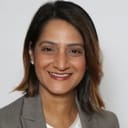
Overview
Samrah Kazmi serves as Expert CISO at Primary Venture Partners [4] and is recognized as a leading voice in Enterprise AI [2]. Kazmi holds the position of Chief Information Security Officer at RESRG [3] and serves as Adjunct Professor at New York University [5]. Additionally, Kazmi founded and leads Women in Sustainable Innovation [6] and advises Harvard Business Review [7]. Kazmi's background includes previous roles as Chief Information Security Officer at Koxa [8], Visiting Professor at Pratt Institute [9], and Co-Founder, COO, CISO and Board Member at Maiden Century [10]. Kazmi's education includes study in Disruptive Strategy at Harvard Business School [11], Corporate Innovation at MIT Sloan School of Management [12], and Digital Transformation at UC Berkeley Haas School of Business [13].
Profile introduction
Samrah Kazmi is the leading voice in Enterprise AI. As a growth catalyst, award-winning Risk Executive & global Tech Influencer, Samrah has deep experience in designing Artificial Intelligence products & services for Regulated industries. She is the top advisor to Cybersecurity, ClimateTech, Fintech, Enterprisetech & Regtech startups & VCs. As a hands-on industry practitioner with a banking & tech background, Samrah's unique ability to translate regulations and advanced technical concepts into transformative business strategies, for both technical & non-technical audiences, has made her the…
Career history
- Chief Information Security OfficerJul 2020 to presentRESRG
- Expert CISO2024 to presentPrimary Venture Partners
- Adjunct ProfessorJul 2020 to presentNew York University
- Founder & CEO2020 to presentWomen in Sustainable Innovation
- Advisor2020 to presentHarvard Business Review
- Chief Information Security Officer2023 to 2024Koxa
- Visiting Professor2022 to 2024Pratt Institute
- Co-Founder, COO & CISO - Board Member2021 to 2022Maiden Century


Education
Disruptive Strategy2019Harvard Business School
- Corporate Innovation: Strategies for Leveraging Ecosystems at MIT Sloan School of Management2020
Digital Transformation: Leading People, Data & Technology2019University of California, BerkeleyHaas School of Business
Insights & ideas
The through-line
Everything Samrah Kazmi says circles back to a single conviction: that stability is not available, and the only durable substitute for it is a deliberately built capacity to absorb shocks. She describes resilience as "this ability to bounce back after an adverse event," notes that "some people are actually born with it but it's also a muscle that you can build," and says she decided that even if she had the muscle, "I need to strengthen it" [1]. That decision followed a Wall Street career "defined by layoffs induced by mergers and Acquisitions consolidations and of course the credit crisis," which put her in "a cycle of constant reinvention constant self-discovery and constant Trend identification" [1]. What she wanted first was stability, and "very quickly I learned that that is not something that is possible" [1].
The method she settled on is a two-directional one, and it recurs in her advice to founders, to women earlier in their careers, and in her own practice: "always draw upon my past experiences and look towards future Trends and bring them together to make it current and relevant" [1]. It is the logic behind what she calls a portfolio of competencies rather than a linear track, and it explains why the same person moves between emerging markets trading, credit structuring, running a green bank inside a utility, and enabling startups without treating those as separate lives [1].
On resilience and lifelong learning
The mechanism that builds the muscle, for her, is study. "One of the things that kept me grounded is my desire for lifelong learning," she says, describing a habit of looking for "new applications of traditional Solutions" and scanning academia for "what new subjects are they offering and how that can help me and my industry in moving forward" [1]. The payoff is not credentials but early sight of change: this scanning "has allowed me to not be disrupted by all these big disruptions that are going on right now" [1]. She is candid that discipline and mindset matter as much as content, and that in a world where you risk "completely coming untethered," having grounding elements is what makes a person resilient [1].
Her models are consistent with that. Her mother, a geography professor who took her daughters along on topographical surveys and framed them as picnics, is the source of both her curiosity and her streak of activism, having been an activist "even in her day in a very conservative Society" [1]. Professionally she points to Christine Lagarde, admiring her as "self-assured and so stoic and just so relentless" and, pointedly for someone at that level of authority, "Scandal free" [1].
On what futurism actually is
She is emphatic that futurism is misunderstood. "People have this misconception that futurism is all about predicting the future and in fact that's clearly what it's not," she says, adding that in futurist circles a claim to predict the future "is the sign of an amateur" [1]. Her definition is procedural: "a highly structured process of Designing hypothetical scenarios to anticipate events in an unexpected future," made more urgent by economic instability, geopolitical uncertainty and the pace of technological change [1]. She treats it as an established discipline rather than a novelty, taught at leading universities and staffed inside large organisations and governments including the Department of Defense, used for strategy and product development [1].
She also insists it is "both an art and a science," heavy on scenario generation, thinking outside the box, and then converging on consensus [1]. She names Amy Webb of the Future Today Institute as a favourite, and is drawn to the fact that futurists work not only with corporations and governments but with Hollywood producers, an area she says they almost own because they can generate the scenarios [1]. Her own use of it is instrumental and ties directly to her risk work: "I like to lean into futurism because it helps me identify emerging Trends and emerging risks and then build scenarios from that" [1].
On risk as a strategic function, not a compliance chore
Her view of risk changed inside the credit crisis, when, as she puts it, "from being a risk taker I now became a risk manager literally at the middle of the crisis" [1]. What she saw then was that "risk is taking on a life of its own," gaining importance and moving into "strategic decision making at all levels of the organization," and she set out to find its applications beyond traditional financial services [1]. That framing carries into her later positioning as an independent risk and innovation consultant, and into her arguments about prioritising modernisation efforts and balancing risk against reward when setting a company up for success [3][8].
The concrete form this takes is her work with startups, where she deliberately declines the usual advisory role. Rather than being "your usual startup advisor who normally can advises you on product or connects you with investors," she wanted to offer something more practical [1]. The gap she kept finding was commercial as much as technical: charismatic founders with excellent products who "were having a very hard time selling into large organizations like hedge funds and Banks," and what they lacked were risk and security frameworks [1]. Incumbent banks carry strict compliance obligations, so any startup selling into them has to be able to meet those frameworks [1]. She describes the resulting practice as impact work done "from a place of inspired action," because the products she unblocks then reach large organisations and society at scale [1]. The other pull is the futurism in it: "you are seeing new technology doing new things in new ways or ways that you didn't think ever existed and reaching so many people just by you know a flip of a switch" [1].
On alternative data and setting standards
Maiden Century, which she co-founded with Kester Hassan, she describes as "data science in a box," letting institutional investors derive insights from alternative data, which she defines plainly as "data from your cell phone from satellites from parking lots Etc" [1]. Her interest is less in the product than in the position it occupies: the category is exploding as apps and consumer behaviour generate ever more data, and she frames the company as first into the space and as the one "defining the standards on the use of alternative data" [1]. Standard-setting, in her account, is what makes a company forward-looking rather than merely early.
On where fintech is going
Asked where the opportunity lies, she puts the strategic shift ahead of any vertical: "the biggest Evolution that we are seeing right now is putting the customer at the center of the value proposition," where the previous era "was all about removing friction reducing costs and creating process efficiencies" [1]. Within the sector she distinguishes matured segments from open ones. Payments she considers mature, citing Square and Venmo [1]. Central bank digital currencies she treats as genuinely early, noting the Bahamas as the first country to issue one and arguing that a smaller, less complex economy makes an easier issuer and therefore a usable template for larger economies [1]. In wealth management she points to robo advisory as the force bringing the discipline to the masses and building awareness among younger people who would otherwise arrive at investing much later because it traditionally required substantial sums, while noting that fintech has gamified investing "for better for worse" [1].
On women, mentorship and authority
Her mentoring is informal and inbound, driven by women who reach out on LinkedIn and Twitter, either just entering the workforce or mid-career and feeling stuck [1]. The advice she gives is the same trend-scanning discipline she uses herself, applied to the labour market: watch academia, and "even look at Job boards what are the new jobs that are being posted," because that is where you see the new demand organisations are creating [1]. The second half is visibility. She notes she is a globally ranked technology influencer and that people ask her how to gain that kind of standing, her answer being that "being an authority thought leader influencer those all require similar techniques but there are nuances to it" [1]. She is honest about how she learned it: "I muddled my way through it and then finally figured out a pattern and now I'm able to succinctly describe that pattern" [1]. Having lacked female mentors herself, she now makes a point of being one, and holds that sometimes you have to go through a particular process before you understand what you are capable of [4][7][9].
She is direct about the confidence gap, arguing that women often lack confidence and audacity and tend towards people-pleasing where men are more straightforward [4][7][9]. Her remedy is to separate identity from job title: she argues against climbing the corporate ladder at the expense of your own ambitions and for disentangling who you are from your accomplishments and professional milestones, so that passion rather than label drives the work [4][7][9].
On sustainability and activism
Women in Sustainable Innovation, founded in 2019, exists because the sustainable innovation discipline is skewed towards male counterparts, and had reached 1600 members with plans to add offerings and live events as pandemic restrictions lifted [1]. She stops short of calling herself an activist while acknowledging the pull: "I do want to enable women in this uh highly competitive environment where it's biased towards their male counterparts," and she traces that streak directly to her mother [1]. The community work sits alongside her comparative observations across industries and her scepticism about greenwashing [6].
Takeaways
- Treat resilience as trainable rather than innate; the grounding habit that builds it is continuous learning, including scanning academic course catalogues for what is emerging in your industry [1].
- Futurism is not prediction. Claiming to predict the future marks you as an amateur; the discipline is "a highly structured process of Designing hypothetical scenarios to anticipate events in an unexpected future" [1].
- Startups selling into banks and hedge funds usually stall on missing risk and security frameworks, not on product quality [1].
- Since the credit crisis, risk has moved into "strategic decision making at all levels of the organization," which is why modernisation should be prioritised by balancing risk against reward [1][3][8].
- Fintech's current shift is from friction, cost and process efficiency towards putting the customer at the centre of the value proposition; payments are mature, CBDCs and robo advisory are not [1].
- To build career visibility, watch job boards for newly created demand and learn the techniques of authority and thought leadership deliberately [1].
- Separate your identity from your titles and milestones, and do not climb the ladder at the cost of your own ambitions [4][7][9].
- Sustainable innovation is biased towards men, which is the reason Women in Sustainable Innovation exists and had grown to 1600 members [1][6].
Media & appearances
- Digital Transformation TalksApple PodcastsPrioritizing Modernization - It's All About Balancing Risk & RewardSamrah Kazmi, an independent risk and innovation consultant and RegTech influencer, talks with us about prioritizing your modernization efforts and how to set your company up for success. RESOURCES & LINKS ➞ Your Ultimate Guide to Digital Transforma Additional recording: Digital Transformation Talks.
- The Jill Cruz PodcastApple Podcasts102. Samrah Kazmi - Find Your True Passion And Identity In The WorkplaceIt’s time to stop putting our ambitions on the back burner and find our true passions. Samrah Kazmi is an entrepreneur, trend hunter, and startup advisor in the fintech industry and shares her thoughts on staying true to yourself and your passions in your professional life. It’s so easy for us to lose our true nature in the working world, and we often lose focus while climbing the corporate ladder instead of pursuing who we really want to be. The key to building the confidence to chase our dreams is disentangling our identities from our work accomplishments. You must change your mindset and appreciate who you are outside of your titles and professional milestones so you can learn to live with passion and enthusiasm. No corporate labels can trump your own badass identity! Show Notes:⬆️ Samrah’s career path: we sometimes go up the corporate ladder or a particular path at the detriment of our ambitions and aspirations. 03:27👔 Women often lack confidence and audacity and tend to be more people-pleasing, while men are more straightforward. 07:08🔶 Samrah lacked female mentors so now she makes sure to be one for others: sometimes you need to go through a particular process to understand what you're capable of and understand your passions. Additional recording: The Jill Cruz Podcast.
- Exige International's Leadership SeriesApple PodcastsSamrah Kazmi, COO of Maiden Century & Founder of Women in Sustainable InnovationAnother wonderful guest on this weeks podcast - Samrah Kazmi. Samrah is a Fintech Founder, an award-winning risk executive and the founder of an organisation called Women in Sustainable Innovation. She is a wonderful speaker and influencer in the fintech and regtech space, and an avid supporter of women in the sustainability industry. It was a really insightful conversation and it was a pleasure to have Samrah as a guest. In today's show we discuss the Women in Sustainable Innovation community, the differences she’s seen between industries and a bit about greenwashing. Samrah Kazmi https://www.linkedin.com/in/samrahkazmi/Women in Sustainable Innovation https://www.womeninsustainableinnovation.com/Samantha Smart https://www.linkedin.com/in/samanthasmart1/Exige International https://www.exigeinternational.com/Exige International LinkedIn https://www.linkedin.com/company/exige-international/ Hosted on Acast. See acast.com/privacy for more information.
- YouTubeFuturism and Social Innovation with Samrah KazmiSamrah Kazmi discusses her non-linear career spanning investment management, cyber strategy, and fintech, including her work on organizational resilience in emerging tech startups through her risk advisory practice. She describes co-founding Maiden Century, a data science software company focused on alternative data for institutional investors, and founding Women in Sustainable Innovation, a community supporting female-founded sustainability ventures with 1600 members.
- The Jill Cruz Podcast | 102. Samrah Kazmi - Find Your True ...It’s time to stop putting our ambitions on the back burner and find our true passions. Samrah Kazmi is an entrepreneur, trend hunter, and startup advisor in the fintech industry and shares her thoughts on staying true to yourself and your passions in your professional life. It’s so easy for us...
share.transistor.fm
- YouTubeSamrah Kazmi - YouTubeEmail: info@samrahkazmi.com Website: https://samrahkazmi.com/ LinkedIn: https://www.linkedin.com/in/samrahkazmi/ Facebook: https://www.facebook.com/TheSamrahKazmi/ Pinterest: https://www.pinterest.com/samrahkazmi/ Twitter: https://twitter.com/SamrahKazmi Instagram: https://www.instagram.com/samrahkazmi/ TikTok: https://www.tiktok.com/@samrahkazmi
- Apple PodcastsApple Podcast:《The Jill Cruz Podcast》〈102. Samrah Kazmi ...It’s time to stop putting our ambitions on the back burner and find our true passions. Samrah Kazmi is an entrepreneur, trend hunter, and startup advisor in the fintech industry and shares her thoughts on staying true to yourself and your passions in your professional life. It’s so easy for us to lose our true nature in the working world, and we often lose focus while climbing the corporate ladder instead of pursuing who we really want to be. The key to building the confidence to chase our dreams is disentangling our identities from our work accomplishments. You must change your mindset and appreciate who you are outside of your titles and professional milestones so you can learn to live with passion and enthusiasm. No corporate labels can trump your own badass identity! Show Notes:⬆️ Samrah’s career path: we sometimes go up the corporate ladder or a particular path at the detriment of our ambitions and aspirations. 03:27👔 Women often lack confidence and audacity and tend to be more people-pleasing, while men are more straightforward. 07:08🔶 Samrah lacked female mentors so now she makes sure to be one for others: sometimes you need to go through a particular process to understand what you're capable of and understand your passions.
- The Jill Cruz Podcast - 102. Samrah Kazmi - Find Your True
Podcast Addict
This page shows public professional information only, each fact cited. Is this you? send a correction, or ask for removal within 24 hours, no questions asked.