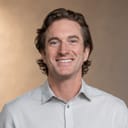
Overview
Josh Walsh serves as co-founder and CEO of BranchLab[1][2][3], a healthcare advertising data company based in New York. Walsh holds the position of co-founder and chief executive officer at the organization[1], as documented in professional profiles maintained on LinkedIn[2][3].
Career history
- Co-Founder, CEOFeb 2024 to PresentBranchLab
- Co-FounderFeb 2011 to Feb 2024AdTheorent™
- Adjunct ProfessorDec 2013 to Jun 2014New York University
- Search Marketing SupervisorJul 2010 to Feb 2011Media Contacts
- Search Marketing SpecialistSep 2009 to Jul 2010Media Contacts
- Project ManagerJun 2008 to Sep 2009Catalyst Online
- SEM Training Consultant2007 to 2008EBSCO Publishing


Education
BA, Marketing/Information Technolgies2004 - 2008Isenberg School of Management, UMass Amherst
Insights & ideas
The through-line
Josh Walsh's central argument is that pharmaceutical commercialization is a system stuck one full technology cycle behind the rest of advertising, and that fixing it is not merely a commercial opportunity but a public health one. Everything upstream and downstream of the media buy, patient population modeling, HCP modeling, audience creation, deployment sizing, and measurement, is "all offline, all manual" and takes "3, 6, 9 months sometimes" [1][2]. He saw this from the inside while building a specialized pharma DSP division inside his previous company, and concluded the problem was much bigger than a DSP [1][2]. The founding logic of BranchLab follows directly: "the current system is really inefficient and slow. It's just a bad system. We could do better. And if we do that, then we should expect better health outcomes in this country" [1][2].
The second, quieter through-line is that this is the same problem he has already solved once, in a different market. AdTheorent was built as the first mobile DSP at a moment when media had to be bought through ad networks and app developers, "all offline, slow", and the fix was to bring that activity online so agencies and brands could in-house it [2]. Pharma audience vendors today look to him like those ad networks: "they're packaging up data that they buy from elsewhere into packages and reselling it offline. You can order it through a phone call or an email. You know, huge T&E budgets, like all the ad network stuff that we saw 15, 20 years ago kind of still exists here" [1][2].
On skipping a whole tech cycle
Because pharma marketing never went through the SaaS transition, Walsh thinks it can leapfrog it entirely. "We're sort of skipping that SaaS cycle that has dominated for the past 15, 20 years and we're going straight to, you know, building with AI agentic front ends and these types of things" [1][2]. He frames this as the most interesting part of the timing: taking practitioners "used to working in these offline ways and rapidly bringing them into the future, which actually feels more human than that SaaS intermediary anyway" [1][2]. The claim is worth noting because it inverts the usual pitch: the agentic interface is not a step further from human process, it is a step back toward it, closer to how these teams already work by phone and email than a dashboard would be.
He is also clear that the industry's backwardness is not incompetence. "This industry is way behind. And it's not for lack of trying. It is a much harder problem" [2]. The dominance of audience vendors exists precisely because "the data assets are challenging to work with, hyper-unique state and federal regulations" [2]. The technical approach he has described elsewhere follows from that constraint: BranchLab's use of neural networks trained on non-health data, in a regulatory environment being reshaped by new privacy rules [5].
On measurement and the outcomes era
Measurement is where Walsh is most damning. On the back end of pharma campaigns, "measurement, you know, takes many months. It's really hard to make any intelligent decisions from the current measurement that we get" [1][2]. Optimization, in his account, "largely doesn't really exist" in any meaningful sense: the state of the art before BranchLab was an agency choosing two, three, or as many as ten audience vendors and then measuring audience quality or something like a prescription fill perhaps six months in [2]. As every company in advertising is now held to the standard of driving measurable outcomes, that lag is the binding constraint on the whole category.
On the health outcomes argument
Walsh is careful about what pharma advertising can and cannot do, and builds his mission statement on the limit rather than around it. "Pharmaceutical health care marketing efforts at best they can convince somebody to talk to a doctor. We can't sell drugs like, you know, the best we can do is say talk to your doctor if you feel this way and and perhaps there's something that'll make you feel better" [2]. He bridges from there to outcomes via "a large body of mostly academic work that would suggest, you know, the more people speak with doctors, the better health outcomes they have" [1][2]. The corollary matters as much as the claim: "the inverse is if we don't catch up with where the industry is heading, we should expect a degradation in those health outcomes" [1][2]. The internet is changing dramatically and advertising with it, and pharma failing to keep pace is, in his framing, a health risk rather than just a marketing one [1][2].
On why founders come back to build again
Asked why an exited ad tech founder returns to the same industry, Walsh points first to the collapsing cost of starting: "building is so much easier nowadays. Like you can build a great prototype in an hour. Like you can sort of bring ideas to life and... that's just becomes infectious and builds on itself" [1]. His own re-entry was near-instantaneous. He left AdTheorent on January 31, 2024, took exactly one day off, and incorporated BranchLab on February 2 [1][2]. The conviction came from having built AdTheorent Health during a second stint at the company, a division that grew fast and contributed to EBITDA, and which gave him "a front row seat with some of the largest pharma companies in the world" [1][2].
On what a second-time founder does differently
Two things change immediately, in his telling: fundraising and people. "Number one is proper fundraising", something he and his first team had to learn as they went [1][2]. The second is that "you kind of just like know what you need and want and you can get there hyper quick", combined with simple availability, since "talent wants to work for a second-time founder more than they do a first-time founder", and the same holds for investors [1][2].
On hiring people who know what a startup actually is
Walsh's hiring bar has two layers. The first is track record, and BranchLab's leadership reflects it: CTO Dan Parks founded the mobile ad tech company Placecast, sold it, served as a CTO at Ericsson, and ran ad technology for Amazon Prime Video, building that stack globally including the NFL [1][2]; head of AI Cat Drake was previously head of computational biology and data science at Verily, Google's health data play [1][2]. But he insists the resume is the less important filter. "More importantly, you can also sort of like subset out like yes, you have this hyper impressive resume. But have you worked at a startup? Do you know what that really means? Cuz I now know what that really means" [1][2].
What it means, in his description, is not glamorous. "It's not all like a party. It actually most days it's really hard... most days it's not very fun. Like it's a really really hard job. And you kind of have to want that for some weird reason to like suffer most days" [1][2]. The practical consequence is that a bigger inbound funnel of people who "want to work for equity" lets him screen for a specific temperament: people who understand that shipping may require "996 for 6 months in order to get something out the door", and who are "fanatical or crazy enough or dumb enough, I don't know what the right word is" to be drawn to that life [1][2]. He puts it plainly: "okay, this person is a bit of a lunatic in this way and that's what's required in order to do this thing" [1][2].
On assembling a cap table like a management team
BranchLab's $26 million Series A, one of the largest in recent ad tech history, was constructed around four distinct needs rather than around whoever would write a check [1][2]. McKesson brought data above all: Walsh describes it as sitting on "by far the best data in the space", a company he notes ranks around seventh largest in the US by revenue, owning companies that handle 83% of all prescription adjudications, prior authorization data, the largest US oncology network, and the EMR running the hospitals inside it [1][2]. He calls it a good to great company that has led for decades, and says early conversations are underway about integrating those data assets more deeply, while acknowledging the obvious asymmetry: "they're a big company. I'm sure they'll be much slower moving than BranchLab" [1][2]. FCA was chosen as "a pure financial" precisely because he did not want strategics only: "We want financial discipline. We want folks that have been investing into the best companies in healthcare for a long time" [1][2]. AIX supplied AI expertise, including partner Chris Manning, formerly a director of the Stanford AI Lab and inventor of GloVe, a precursor to transformer technology, giving BranchLab daily working access to that team [1][2]. Sanofi, on the manufacturing side, was the hardest call, since only around half of the top ten pharma manufacturers have VC arms permitted to invest in tech and, by his account, they were all at the table [1][2].
The governing analogy is explicit. "In the same way that you'd want to craft a really good management team at a company, that's not a terrible way to think about how to raise a big series" [1][2]. The questions he asks of investors are the ones he would ask of executives: "How do they complement each other? How are they going to challenge me? How do they make me better as a group" [1][2]. He treats this as a genuine shift in founder leverage over fifteen years: "founder friendly wasn't a term and it was like you needed money. And nowadays, yeah, you need money, but also there's so much opportunity that you get to ask like, okay, and what else?" [1][2]. That partnership is literal, not ceremonial; he describes spending multiple days at Sanofi HQ [1][2].
On moving at the speed of the right investor
The Next Ventures investment is Walsh's case study in acting fast when a partner is obviously right. It began with a LinkedIn message asking to come to Boulder and talk about the company; his first reaction was "is this a bot?", his second that sending such notes is simply an investor's job, and his third that he was heads down onboarding customers and not in fundraising mode [1][2]. He took the meeting because they were willing to spend an hour in his office [1][2]. Within days the firm's position was that they did not want to wait for a proper Series A and believed they had until Friday to convince him, and the deal closed Friday at 8:00 in the morning, against an industry norm where raises and closings both take months [1][2]. What justified the speed was caliber and follow-through: the Next team worked with him daily through the subsequent Series A process, with scheduled calls, cell phone access, introductions, and joint strategy [1][2]. Lance Armstrong himself is an active presence, attending a company offsite, joining a panel and hiking with the team, which Walsh values as "a smart, motivated person with a unique experience and perspective on the world" [1][2]. He also enjoyed the theatre of it, walking into the office the following week with a framed signed jersey [1][2].
Takeaways
- Pharma commercialization work, from patient population and HCP modeling through audience creation, deployment sizing and measurement, remains "all offline, all manual" and can take "3, 6, 9 months sometimes", which is the inefficiency BranchLab was founded to remove [1][2].
- Today's pharma audience vendors resemble ad networks of 15 to 20 years ago, reselling repackaged third-party data via phone call or email on large T&E budgets [1][2].
- Because the category never adopted SaaS, Walsh believes it can skip that cycle entirely and go straight to AI agentic front ends, which he argues feel "more human than that SaaS intermediary anyway" [1][2].
- The mission case rests on a limit, not a claim: pharma marketing at best convinces someone to talk to a doctor, and academic work links more doctor conversations to better health outcomes, so a faster system should improve outcomes and a stagnant one should degrade them [1][2].
- Measurement in pharma "takes many months", optimization "largely doesn't really exist", and the industry is behind "not for lack of trying" given difficult data assets and hyper-unique state and federal regulations [2].
- Hire for resume second and startup temperament first: ask whether a candidate truly knows what a startup means, and look for people willing to accept "996 for 6 months in order to get something out the door" [1][2].
- Build a cap table the way you build a management team, covering data, financial discipline and AI expertise separately, and demanding "additional value than just capital" [1][2].
- Building is now cheap enough that a prototype takes an hour, which Walsh cites as a reason experienced founders are returning to ad tech during the AI era [1].
Media & appearances
- SportsdayApple PodcastsComparing Jacob Weitering & Sam Walsh speaking about Josh Fraser (05.08.26)Comparing Jacob Weitering & Sam Walsh speaking about Josh Fraser. Learn more about your ad choices. Visit megaphone.fm/adchoices
- Open MarketApple PodcastsEpisode 103 Branchlab Co-Founder and CEO Josh WalshJosh Walsh, Co-Founder & CEO of BranchLab, joins Eric and Joe to discuss transforming pharma advertising with AI, scaling a second startup, and an unexpectedly important LinkedIn message from Lance Armstrong.
- The Optimus Fantasy Football PodcastApple PodcastsScott Fish Bowl 16 Mock w/ Josh Walsh of LJ3 Cards | Mock Draft MondayMike Vadala hosts a Mock Draft Monday first — our show's debut guest, Josh Walsh of LJ3 Cards — for our first Scott Fish Bowl mock of the 2026 season. SFB16's video-game scoring changes everything you think you know about a draft board. With ten fle
- MarketectureApple PodcastsEpisode 141: The State of Pharma Advertising with Josh Walsh of BranchLabGet Smart. Fast.: Ari Paparo and Eric Franchi speak with Josh Walsh, founder and CEO of BranchLab, about how pharmaceutical advertising is changing. The discussion covers BranchLab’s use of neural networks with non-health data, the impact of new privacy regulations, an
- Adam Carolla ShowApple PodcastsMatt Walsh & Justin Folk On Their Film “Am I Racist?” + Deaf Frat GuyThe show opens with Adam telling Dawson & Deaf Frat Guy about his run-in with a rattlesnake on PCH last night. Then, Adam reveals some surprising names who he recently found out claim to be big fans of his, listen to another song that can be filed under Statutory Rape Rock, and play another round of “JV or All Balls.” Next, Dawson reads the news including stories about whether or not Hugh Jackman used steroids to get in shape for Deadpool & Wolverine and parental stress being deemed a serious public health issue according to the U.S. Surgeon General. Finally, Matt Walsh & Justin Folk join the show to talk about their new documentary “Am I Racist?”, how the left exploits people who are just trying to be polite, and whether or not November’s election will mark the end of “wokeness.” For more with Matt Walsh: ● NEW MOVIE: Am I Racist? - in theaters September 13th ● TWITTER/X: @MattWalshBlog ● INSTAGRAM: @MattWalshBlog For more with Justin Folk: ● NEW MOVIE: Am I Racist? - in theaters September 13th ● TWITTER/X: @JustinFolk For more with DFG: ● VENMO: Josh [dash] Gardner [dash] 101 ● TWITTER/X: @DeafFratGuy Thank you for supporting our sponsors: ● http://SimpliSafe.com/Adam ● http://ForThePeople.com/Adam or Dial #LAW (#529) ● http://OReillyAuto.com/Adam See Privacy Policy at https://art19.com/privacy and California Privacy Notice at https://art19.com/privacy#do-not-sell-my-info.
- Unsung Hero PodcastApple PodcastsJosh Walsh Full Interview - Ep 4 BonusIn this bonus episode, Luke Smallbone sits down with Co-Producer Josh Walsh! The two talk about how Josh got involved in film production, his first reaction to reading the Unsung Hero script, and what his favorite on-set moment was. Unsung Hero is in
- Parenting Hell with Rob Beckett and Josh WiddicombeApple PodcastsS05 EP44: Seann WalshJoining us this episode to discuss the highs and lows of parenting (and life) is the brilliant comedian - Seann Walsh. Tickets and tour dates for Seann's hilarious new stand-up show are available from www.seannwalsh.com And you can listen to his fantastic podcast 'What's Upset You Now?' wherever you get your podcasts. Thanks, Rob + Josh. We're going on tour!! Fancy seeing the podcast live in some of the best venues in the UK? Of course you do, you're not made of stone! Tickets available now on the dates and at the venues below. We can't wait to see you there... ON SALE NOW 14th April 2023 - Manchester AO Arena 19th April 2023 - Nottingham 20th April 2023 - Cardiff 21st April 2023 - London (The O2) 23rd April 2023 - London (Wembley) 28th April 2023 - Birmingham Utilita Arena If you want to get in touch with the show here's how: EMAIL: Hello@lockdownparenting.co.uk TWITTER: @parenting_hell INSTAGRAM: @parentinghell A 'Keep It Light Media' Production Sales, advertising, and general enquiries: hello@keepitlightmedia.com Learn more about your ad choices. Visit podcastchoices.com/adchoices
- YouTubeEpisode 103 Branchlab Co-Founder and CEO Josh WalshJosh Walsh discusses founding BranchLab after his previous company Adzerk, explaining how he built an Adzerk Health division serving pharma customers and recognized inefficiencies in pharmaceutical marketing workflows including patient population modeling, HCP modeling, audience creation, and measurement. He describes BranchLab as solving similar problems to what early mobile DSPs solved, bringing offline pharma marketing processes online and automating what currently requires months of manual work.
- Apple PodcastsOpen Market - Podcast - Apple PodcastsMarketing Podcast · Updated Weekly · Open Market is a podcast about building companies in the advertising industry. This is not another news podcast. Rather, hosts Eric Franchi and Joe Zappa dive into the stories of successful companies …
- YouTubeJosh Walsh, Co-Founder & CEO of BranchLab, joins to talk AI ...Josh Walsh discusses founding BranchLab after his previous ad tech company AdThera, explaining how he recognized inefficiencies in pharmaceutical marketing workflows. He describes how pharma commercialization efforts—including patient population modeling, HCP modeling, audience creation, and measurement—are currently manual and offline processes that take months, and how BranchLab is automating these with AI to improve health outcomes by enabling better doctor-patient conversations.
- LinkedInBranchLab CEO Josh Walsh on the Open Market Podcast - LinkedIn
- Episode 141: The State of Pharma Advertising with Josh Walsh ...
PodParadise
- Episode 103 Branchlab Co-Founder and CEO Josh Walsh
Podtail
This page shows public professional information only, each fact cited. Is this you? send a correction, or ask for removal within 24 hours, no questions asked.