Overview
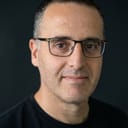
Dedi Gilad is co-founder and CEO of TytoCare[1], a digital health AI company focused on remote clinical examination and virtual care[4]. Gilad transitioned to the role of Co-Founder and Chairman in November 2025 after serving as CEO and Co-Founder from October 2012 to October 2025[5][6]. Prior to founding TytoCare, Gilad held leadership positions in technology organizations spanning over twenty years[4], including roles as General Manager at M.D.G Medical Ltd.[7], CTO and VP of R&D at WorkplaceIQ[9], and VP of R&D at Calanit Carmon[10]. Gilad holds an MBA from Tel Aviv University (1998–2001) and a BSc in Industrial Engineering from Tel Aviv University (1990–1994)[12][13].
Profile introduction
I'm an entrepreneur at heart and a seasoned executive with a strong passion for solving real-life problems using advanced technologies combined with delightful user experiences. I am the Co-Founder of Tyto Care, a digital health AI company with a mission to redefine primary care service delivery by putting health in the hands of consumers. We seamlessly connect people to clinicians & smart AI agents to provide the best home examination and diagnosis solutions anytime, anywhere. Prior to Tyto, and for over 20 years, I led technology organizations, business initiatives and interdiscipl…
Career history
- Co-Founder, ChairmanNov 2025 to presentTytoCare
- CEO, Co-FounderOct 2012 to Oct 2025TytoCare
- General ManagerJul 2004 to 2011M.D.G Medical Ltd.
- Entrepreneur & Consultant2003 to Jul 2004Self
- CTO and VP R&D1998 to 2002WorkplaceIQ (acquired by Accruent)
- VP of R&D1996 to 1998Calanit Carmon
- Head of R&D Group - Microsoft1994 to 1997Aman Carmon System (Part of Aman Group)


Education
MBA1998 - 2001Tel Aviv University
Insights & ideas
The through-line
Gilad's constant argument is that telehealth as built has hit a ceiling because it cannot examine anyone. Video and audio have been available for twenty years, and yet "utilization wise people don't use it enough you know five to ten percent of the population are using that after a lot of investment into that space" [1]. His explanation is psychological rather than technical: "Healthcare in general and Primary Care specifically is a lot about psychology and trust," and talking to "a physician that you probably don't know and you will probably never see again without any ability for them to diagnose you to examine you reduces the the level of trust" [1]. The fix he has pursued for a decade is to move the physical interaction itself into the house rather than to accept a thinner version of it remotely: "the concept of title is really to take the physical interaction and shift it or replicate it to the home" [1][3].
What has shifted is scope. The origin was narrow and personal, a four-year-old daughter with repeated ear and throat infections and a father making the same trip to the pediatrician every three weeks [1][4][5]. The first commercial wedge was equally narrow, urgent care at night and on weekends [1]. The trajectory since has been outward and downward in acuity: scheduled primary care, chronic monitoring, hospital at home, and now ambitions toward passive, always-on sensing [1].
On why telehealth plateaued and what changes the curve
Gilad treats the COVID bump as a distortion rather than a proof point. Uptake rose "just because population couldn't go out but post covet you see a back to reality uh going down in terms of utilization" [1]. His counter-metric is engagement, not availability: with an exam capability in the home, "we are seeing five to eight times utilization" [1]. He is careful not to present this as automatic. Adoption is "a behavioral change slowly it takes time it's complex we invest a lot into education into engagement" [1]. The product claim underneath is that one kit covers the full physical exam: imaging of throat, skin, ears and eyes, auscultation of heart, lungs and stomach, and basic vital signs, all captured by a family member and read by a clinician who becomes, in his framing, dependent on the household for its senses, "we are becoming the remote hands and ears and eyes of this clinician" [1][3].
On primary care as the common denominator
Gilad frames TytoCare's strategic choice as a deliberate refusal of the usual startup path. "Usually in healthcare is that you take a very small niche of area very small amount of patient and you're trying to solve a very a restricted problem," and instead the company "took a big bet" on primary care because it is "the common denominator" that fits any household, student, hiker, family with kids, or senior living [1]. He concedes the cost of that choice: it is a wide problem, and "you're not really treating the most cost the most expensive areas" [1]. The payoff is sequencing. Once engagement and adoption exist, additional verticals can be layered on the same installed base, so the home device is infrastructure and asthma, hypertension and pregnancy management are floors built on it [1][5].
His critique of the alternative is blunt and aimed at buyers as much as builders. Companies that started from single conditions, "let's do only diabetic and only hypertension and only this and that," have left health organizations "hammered with tons many many solutions many many platforms very very hard to integrate all of them and it's chaotic" [1]. He also positions the company deliberately away from direct-to-consumer, selling B2B2C through payers, providers and payviders, on the logic that any organization taking insurance risk while delivering care is a natural partner [1][5]. That partner model is what he has discussed alongside health system leadership, including how Highmark Health deploys home-based devices [2].
On moving from episodic care to always-on
He describes a clear progression of care modalities. Episodic urgent care came first, then protocol-driven management for periods of life that need structure, asthma, hypertension, pregnancy, so that the system "can actually not wait for you to be sick not wait for you to be a for this visit to be episodic" [1][5]. The next step he wants is continuous and unobtrusive: monitoring specific populations, "toddlers or young babies or very specific chronic patient over a long period of time passively," picking up "more subtle uh changes whether it's overnight or during the day in a passive way without interfering to the to the lives" and feeding prediction rather than reaction [1]. He identified an acquisition in that space as the vehicle for it [1]. The concrete example of protocol care working is asthma, where the system alerts a clinician to deterioration in a child's condition and can keep a family out of the doctor's office "or even worse without going to see the ER" [1]. He has also spoken about the state of remote patient monitoring and how the virtual visit itself is evolving [3].
On AI, and why the data matters more than the label
Gilad is openly impatient with the term. "I don't really like the term AI people are using it so much without a real credential," though he considers the machine learning genuinely distinctive because the inputs are simple and abundant: images, videos and sound recordings gathered from hundreds of thousands of patients, anonymised and analysed in the background [1]. The first regulatory milestone he cites is FDA clearance for lung sounds analysis, automatically detecting wheeze and crackle [1]. He claims the resulting dataset is not purchasable elsewhere: "you cannot go out to Mount Sinai or to Kaiser Permanente just buy it nobody holds that kind of information" [1].
His argument about what the AI is for differs from the standard one. Most healthcare AI, as he characterises it, sifts large volumes of data to do tedious work quickly and catch what a clinician might miss. TytoCare's approach is to have best-in-class pulmonologists and cardiologists label the data, then push that judgment down to generalists: a pediatrician "might have learned about you know fine crackles in med school but in reality they don't see that phenomenon too often," so tagging by specialists means "giving them the tools of the specialist to the front line of primary care" [1]. He sets an explicit boundary on ambition: "I'm not saying that we will replace clinician we're not even aiming for that we're trying to be very realistic," the goal being insights, alerts and decision support in the near and mid term [1].
Takeaways
- Telehealth's ceiling is trust, not technology: a clinician who cannot examine you and whom you will never see again produces low utilisation, roughly five to ten percent of the population despite heavy investment [1].
- Adding a home physical exam moved utilisation five to eight times higher, but only alongside sustained investment in education and engagement, because the change is behavioural and slow [1].
- Betting on primary care as "the common denominator" for every household is harder and less lucrative up front than a point solution, but it creates the installed base on which asthma, hypertension and pregnancy programmes can be layered [1][5].
- Point solutions leave health organisations with too many platforms to integrate; Gilad calls the result chaotic and sells instead to payers, providers and payviders that carry insurance risk [1][5].
- The care roadmap runs episodic urgent care, then protocol-driven chronic management, then passive always-on monitoring of toddlers, babies and chronic patients for subtle overnight and daytime changes [1].
- FDA clearance for automated lung sound analysis of wheeze and crackle is the first proof point for the AI layer [1].
- Specialist-labelled data is the differentiator: tagging by pulmonologists and cardiologists puts specialist-level interpretation in the hands of front-line PCPs, with no aim of replacing clinicians [1].
Media & appearances
- Slice of HealthcareApple Podcasts#386 - Dedi Gilad CEO and Co-Founder at TytoCareJoin us on the latest episode! Our Guest: Dedi Gilad CEO and Co-Founder at TytoCare What you'll get out of this episode: - Dedi Gilad founded TytoCare a decade ago inspired by his daughter's health experiences, aiming to replicate in-home physician int...
- Flourish with Sarah RichardsonApple PodcastsInterview in Action @ HLTH '22 - Dedi Gilad, CEO, Co-Founder, TytoCare & Monique Reese, DNP, SVP, Highmark HealthDecember 6: Today on the Community channel, it’s an Interview in Action live from HLTH '22 with Dedi Gilad, CEO, Co-Founder of TytoCare & Monique Reese, DNP, SVP at Highmark Health. They discuss TytoCare’s home-based health devices and how Highmark
- Data BookApple PodcastsTytoCare Is Putting the Power of the Medical Exam in a Patient’s HandsHello, and welcome to a brand-new episode of Data Book, a Chief Healthcare Executive podcast. My name is Laura Joszt, and I’m the editorial director of CHE. Today, Dedi Gilad, CEO and co-founder of TytoCare, an at-home, handheld exam kit and app, joins me. We discuss the evolving technology of a virtual visit, the current state of remote patient monitoring and more.
- Slice of Healthcare | #386 - Dedi Gilad CEO and Co-Founder at TytoCare ...Dedi Gilad CEO and Co-Founder at TytoCareWhat you'll get out of this episode:- Dedi Gilad founded TytoCare a decade ago inspired by his daughter's health experiences, aiming to replicate in-home physician interactions.- TytoCare's "Home Smart Clinic" offers remote medical exams, surpassing basic telehealth platform capabilities.- With a presence in 13 countries, 70% of TytoCare's operations are in the US, collaborating with significant health organizations.- The platform is broadening from urgent to comprehensive care, introducing programs for conditions like asthma and hypertension...
Join us on the latest episode! Our Guest
- Dedi Gilad discusses TytoCare's remote clinical exam platform, explaining how it enables full physical examinations from home using a single device that captures imaging of throat, skin, ears, and eyes, plus heart and lung sounds, with clinicians diagnosing remotely. He shares that TytoCare serves over 900,000 patients and 30,000 clinicians across 13 countries, primarily in the US, working with health organizations and providers rather than directly with consumers, and mentions the company is acquiring another firm to enable passive monitoring of chronic conditions.YouTube#386 - Dedi Gilad CEO and Co-Founder at TytoCare - YouTube
- #386 - Dedi Gilad CEO and Co-Founder at TytoCare - Podtail
podtail.com
- iHeartRadio#386 - Dedi Gilad CEO and Co-Founder at TytoCare - iHeart
- Spotify#386 - Dedi Gilad CEO and Co-Founder at TytoCare
This page shows public professional information only, each fact cited. Is this you? send a correction, or ask for removal within 24 hours, no questions asked.