Overview
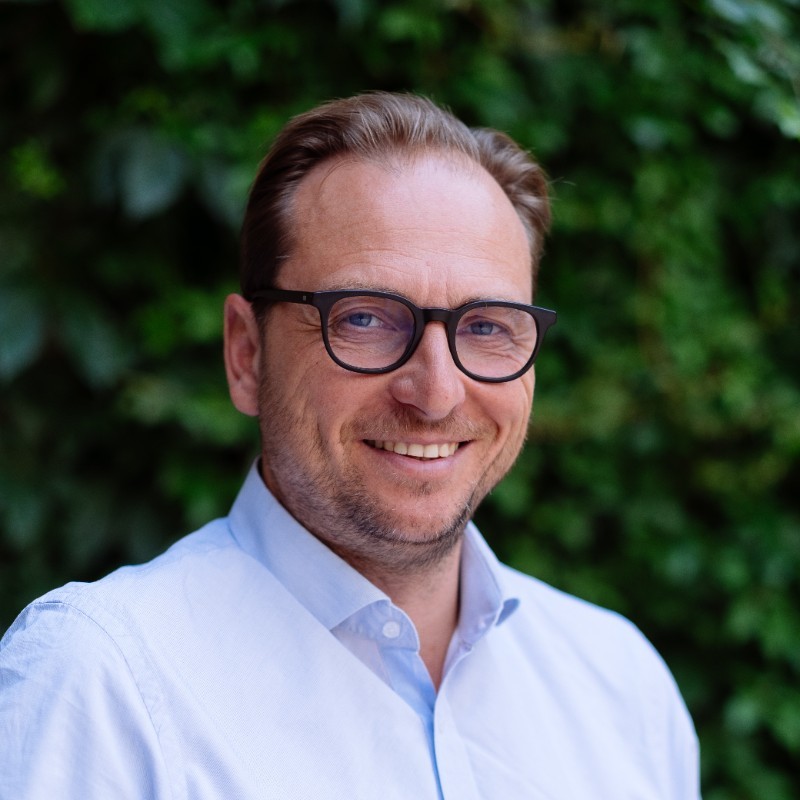
Boris Bogaert is a co-founder, investor, and general partner at Pitchdrive [1]. Bogaert is a tech entrepreneur with experience in people management, culture, strategy, and growth management for fast-growing tech and SaaS startups, characterized by a pragmatic approach to execution [2]. Bogaert has held the position of co-founder, investor, and general partner at Pitchdrive since March 2021 [3], while simultaneously serving as a business angel and growth manager at Tumbzup bv since April 2011 [4]. Prior roles include COO and board member at Rydoo from June 2017 to June 2022 [6], CEO and co-founder of xpenditure from January 2014 to June 2017 [7], and CEO and co-founder of CardWise from April 2011 to January 2014 [8]. Bogaert holds a bachelor's degree in communication management from EhB Brussels, earned between 1994 and 1997 [11].
Profile introduction
Tech entrepreneur with a broad experience in people management & culture, strategy, growth management for fast growing Tech & SAAS startups. All combined with a clear getting things done mentality (JFDI - Just F* Do It)
Career history
- Co-founder, Investor & General Partner PitchdriveMar 2021 to presentPitchdrive
- Business Angel & Growth ManagerApr 2011 to presentTumbzup bv
- Vice Chairman & Independent Board MemberNov 2020 to Jun 2025Flanders Investment & Trade (FIT)
- COO & Board MemberJun 2017 to Jun 2022Rydoo
- CEO & Co-founderJan 2014 to Jun 2017xpenditure (acquired by Sodexo Group)
- CEO & co-founderApr 2011 to Jan 2014CardWise
- Director Business Development EMEAJul 2007 to Apr 2011Netlog - Massive Media - TWOO (acquired by IAC InterActiveCorp)
- Country Manager BelgiumFeb 2006 to Jul 2007Punch Telematix (acquired by Trimble)
- FounderRydoo

Education
- Bachelor, Communication Management at EhB - Brussels1994 - 1997Education
Insights & ideas
The through-line
Boris Bogaert keeps returning to a single division of labour: the investor challenges, supports and opens doors, and the founder does the actual work of turning ambition into reality "through conviction, courage, resilience and relentless execution" [1]. Everything else follows from taking that seriously. It is why Pitchdrive wants to be as close to the operating reality as possible, "Wij willen het liefst aan de kitchen table zitten" [2], why it only accepts mentors who have founded and scaled something themselves, on the grounds that the "I feel the pain" authenticity cannot be substituted with book learning [2], and why he treats the structural question of whether an investor is genuinely in the same boat as a live one rather than a rhetorical one.
The second preoccupation is speed, and it has sharpened over time. In 2024 he was calling the current technology shift roughly "een factor vier tegenover alle andere revoluties" [3]; by 2025 the estimate had widened to four to eight times faster than the internet wave, with an explanation attached: this one is being adopted from the bottom up rather than mandated from the top [2]. That acceleration is what makes several of his other positions cohere, from the collapse of funding stages to the disappearance of SaaS as an investable category.
On why SaaS is over
His verdict is blunt: "Saas is weg. Kijk eens naar de beurskoers van Monday, van HubSpot de laatste weken en maanden. SaaS, voor ons bestaat dat bijna niet meer" [2]. The category is not merely underperforming, it has stopped being a place he invests. The opportunity has moved to business process automation, where AI can save a company millions directly, and away from sales and marketing tooling, which he regards as overcrowded [2]. The same logic shows up in how he reads company vintages: genuinely early-stage startups now build the entire company around AI as a foundation, while a startup even two years old is still trying to integrate it, and that gap is a generational divide rather than a feature gap [3].
On the speed of the AI wave
What distinguishes this wave for him is that nobody ordered it. "Geen enkele CEO die zegt: je moet nu ChatGPT beginnen gebruiken. Mensen zijn dat beginnen gebruiken. Dat maakt een ongeziene virale speed die je nog nooit gezien hebt" [2]. He puts corporate ChatGPT and LLM adoption at around 90 percent, essentially all of it shadow AI arriving without a mandate, and that bottom-up path is his explanation for why the curve is four to eight times steeper than the internet's [2][3]. The counterweight he insists on is that none of this has replaced human dealmaking: deals still get made through relationships and trust built in person, at a bar or in a meeting room [3].
On how funding rounds broke
"Pre, seed, angel round, it's all one round. Die rounds zijn een beetje broken. Dat bestaat eigenlijk niet meer" [2]. The stages have merged into a single event, and average round sizes have grown roughly fivefold over ten years because investors now want both sufficient runway and a stellar team before they commit [2]. The paradox he draws out is that this happened exactly as building got cheaper: experimentation that once needed five developers can now be done by two people in days, so the cost of building has fallen while raising a seed round has become harder [2]. On valuation he is unsentimental. It means nothing until an external party actually pays, what counts is "cash op de rekening" at exit, and founders should be discussing their exit plan from day one, which does not have to mean selling the whole company [2].
On sizing a fund to its own model
Pitchdrive deliberately caps its fund size at around €50M and pushes oversubscribed money back [2]. The reason is arithmetic rather than modesty: the model targets 4x returns through a healthy mid-field of exits, not through the extreme power-law outliers that mega-funds depend on, and a larger fund would break that [2].
On investors sitting in the same boat
The formative example is Harald McPike putting €5M into Xpenditure on common shares, with no preferred rights and no vetoes, deliberately outcompeting every VC in the process [2]. He draws the general lesson from it: sometimes investors should go common in order to genuinely sit in the same boat as the founders [2].
On what a founder actually looks like
Top founders are restless. After hitting €1M ARR they immediately ask how to reach €3M; the rule is "Succes maar niet te lang. En dan next" [2]. He cites Gilles of Henchman reporting daily sales to the entire board in the final weeks of every quarter as the texture of that temperament [2]. But he pairs it with a hard limit: "Voor mij is de maximum leeftijd van de founder die dat aan kan, dat zelfde craziness, is 10 jaar" [2], a span he compares to Jürgen Klopp stepping away [2]. The same figure recurs as a screening criterion: "Een gemiddelde startup founder houdt het 10 jaar vol en dat is lang, vooral de stress, en dan moet je vooral heel goed voor jezelf zorgen" [3], which is why Pitchdrive looks for the balance between drive and self-care in a founding team rather than drive alone [3].
On salary as a cage
His most uncompromising line is about employment itself: "Voor mij is de loon hetzelfde dan heroïne. Dat is dezelfde verslaving. Ene keer als je loon hebt, moet je dat loon elke keer hebben" [2]. The practical advice to graduates follows from it. Join an early-stage startup rather than a corporate, because the first ten employees are entrepreneurs in their own right, whereas a corporate traps roughly 80 percent of people in a salary cage they never get out of [2].
On ecosystems you cannot build on purpose
He is dismissive of engineered startup ecosystems: "Wat pingpongtafels en wat zotte mensen, doesn't work. Ik kan u zeggen: dat werkt niet. Veel overheidsgeld daarin pompen: doesn't work. Dat moet vanuit een buik komen" [2]. Buildings, ping-pong tables and government money do not produce a Netlog mafia; what produces one is a core of successful companies spawning new founders over fifteen years or more [2]. The ingredient he credits from his own environment is attitude rather than infrastructure: "Die cultuur was wel van: alles is mogelijk. Vanuit Gent kunnen wij hier internationaal denken" [2]. That is also the standing advice to Flemish founders who keep asking whether to start in Belgium first: think and act globally from day one [3].
On the difficulty of staying relevant
Staying relevant in B2C is structurally harder than in B2B. Netlog was, in his description, "a very popular café", and even with tens of millions of members it faced the near-impossible task of reinventing itself, which it managed with Twoo becoming the world's biggest dating site by reach in about sixteen months [2]. He also notes what that business was sitting on at the time: "De data die vandaag de Meta heeft, hè, die hadden wij toen" [2].
Takeaways
- Treat SaaS as a closed investment category and look instead at business process automation, where AI saves companies millions directly, rather than at crowded sales and marketing tooling [2].
- Assume pre-seed, seed and angel are now a single round, that round sizes have grown roughly 5x in a decade, and that building is cheap while raising is harder [2].
- Size the fund to the return model: capping at around €50M supports a 4x target built on a mid-field of exits instead of power-law outliers [2].
- Consider investing on common shares with no preferred rights or vetoes, as Harald McPike did with €5M into Xpenditure, if you want to genuinely share the founders' position [2].
- Screen founding teams for restlessness and self-care together, on the assumption that peak founder intensity lasts about ten years [2][3].
- Only let people mentor founders if they have founded and scaled a company themselves; "I feel the pain" authenticity is not replaceable by book learning [2].
- Expect AI adoption to run four to eight times faster than the internet wave because it spreads bottom-up as shadow AI, with roughly 90 percent of corporate uptake happening without any CEO mandate [2][3].
- Discuss the exit plan from day one and treat valuation as meaningless until an external party pays; selling the whole company is not the only option [2].
Related profiles
 Koen ChristiaensCo-founders
 Lorenz BogaertCo-founders · Ecosystem peers
 Toon CoppensEcosystem peers
- YAntwerpLocation
- KAntwerp sceneLocation
PitchdriveRelated
This page shows public professional information only, each fact cited. Is this you? send a correction, or ask for removal within 24 hours, no questions asked.